
Does a Hair Transplant Hurt?
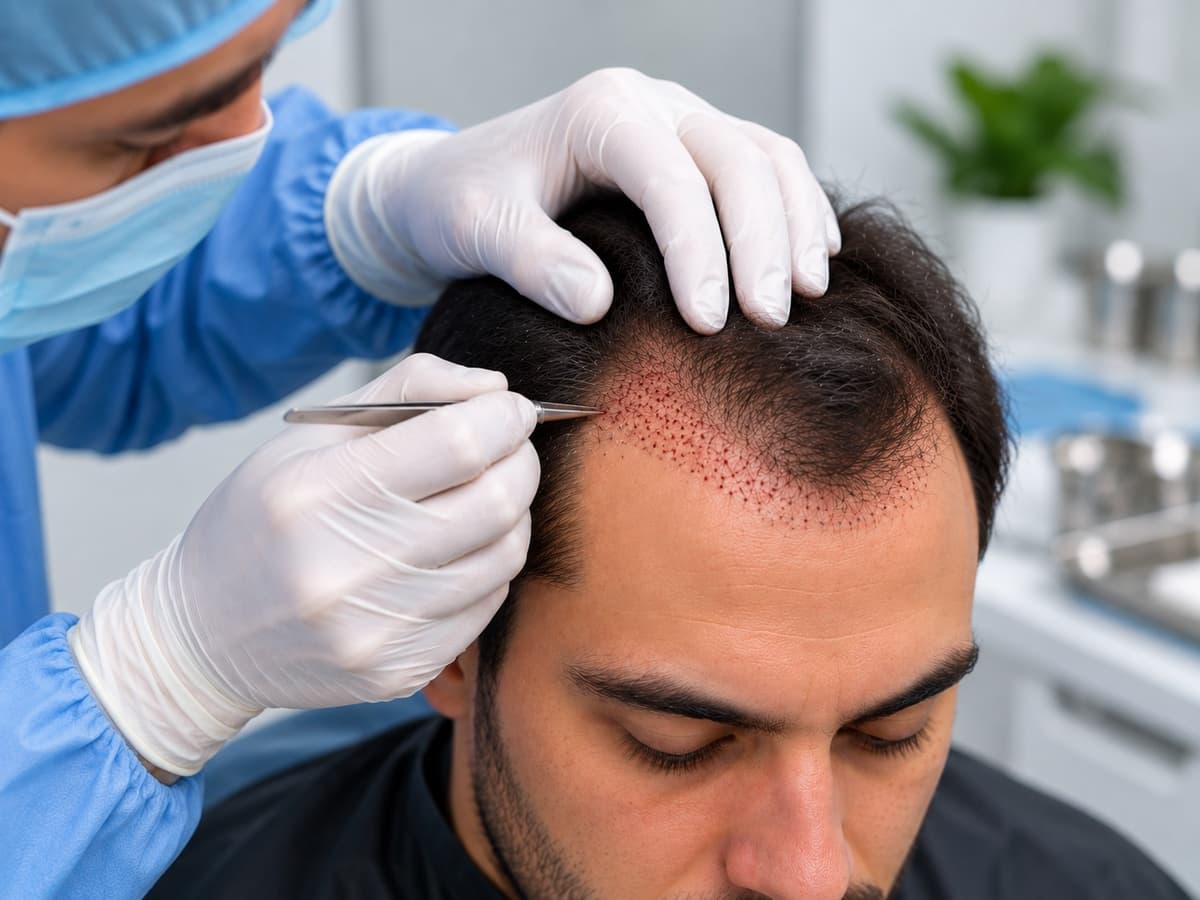
The honest answer, stage by stage — what local anaesthesia does, what you actually feel during the procedure, and what recovery is like.
This is the question people ask last, in a lower voice, after everything else has been discussed. It deserves a straight answer rather than a reassuring one.
During the procedure
A hair transplant is performed under local anaesthesia. The area being worked on is numbed. You are awake throughout, and you are not under general anaesthetic.
The part patients most commonly describe as uncomfortable is the administration of the local anaesthetic itself — a stinging sensation that lasts a short time. Once the area is numb, most patients describe pressure and movement rather than pain.
The procedure takes a while, and for many people the more accurate description of the experience is long rather than painful. Patients generally listen to something, watch something, or talk through it.
Immediately afterwards
As the anaesthetic wears off, it is normal to feel soreness and tenderness in both the donor and treated areas. Some swelling is also common in the days that follow.
Your clinic will give you specific aftercare instructions covering how to sleep, how and when to wash, what to avoid, and how to manage discomfort. Following those properly matters more to your comfort — and to your result — than almost anything else in this article.
The first weeks
Discomfort typically settles over the early days. What tends to bother people more at this stage is not pain but the practical restrictions: not touching the area, sleeping in a particular position, avoiding certain activities until cleared.
Itching as the area heals is common and is not a sign that something is wrong. Scratching it, however, is a genuinely bad idea, and the clinic will tell you what to do instead.
Then the part nobody warns you about
Transplanted hairs shed in the weeks after the procedure. This is expected, and it is not the graft failing — the follicle remains and re-enters a growth phase.
It does not hurt at all. It is mentioned here because for a lot of patients it is the hardest part of the process emotionally, and knowing it is coming makes it much easier to sit through.
Everyone's threshold is different
Pain is subjective and comparisons are not very useful. What is more useful is knowing:
- The area is numbed with local anaesthesia before work begins
- The most commonly reported discomfort is the numbing itself, and it is brief
- Soreness, tenderness and swelling during recovery are normal
- Your clinic will tell you specifically how to manage it
- If something feels wrong rather than sore, you should be able to call and ask
That last one is worth checking before you book anywhere. Knowing you can pick up the phone during recovery is a large part of what makes the experience a manageable one.
This article is general information and not medical advice. Discomfort, recovery and aftercare are discussed for your individual case at consultation.