FUE — Follicular Unit Extraction
Individual follicular units, extracted one at a time.
- Donor result
- Scattered points
- Anaesthesia
- Local
- Graft requirement
- Assessed at consultation
- Suits
- Short hairstyles
What FUE actually involves
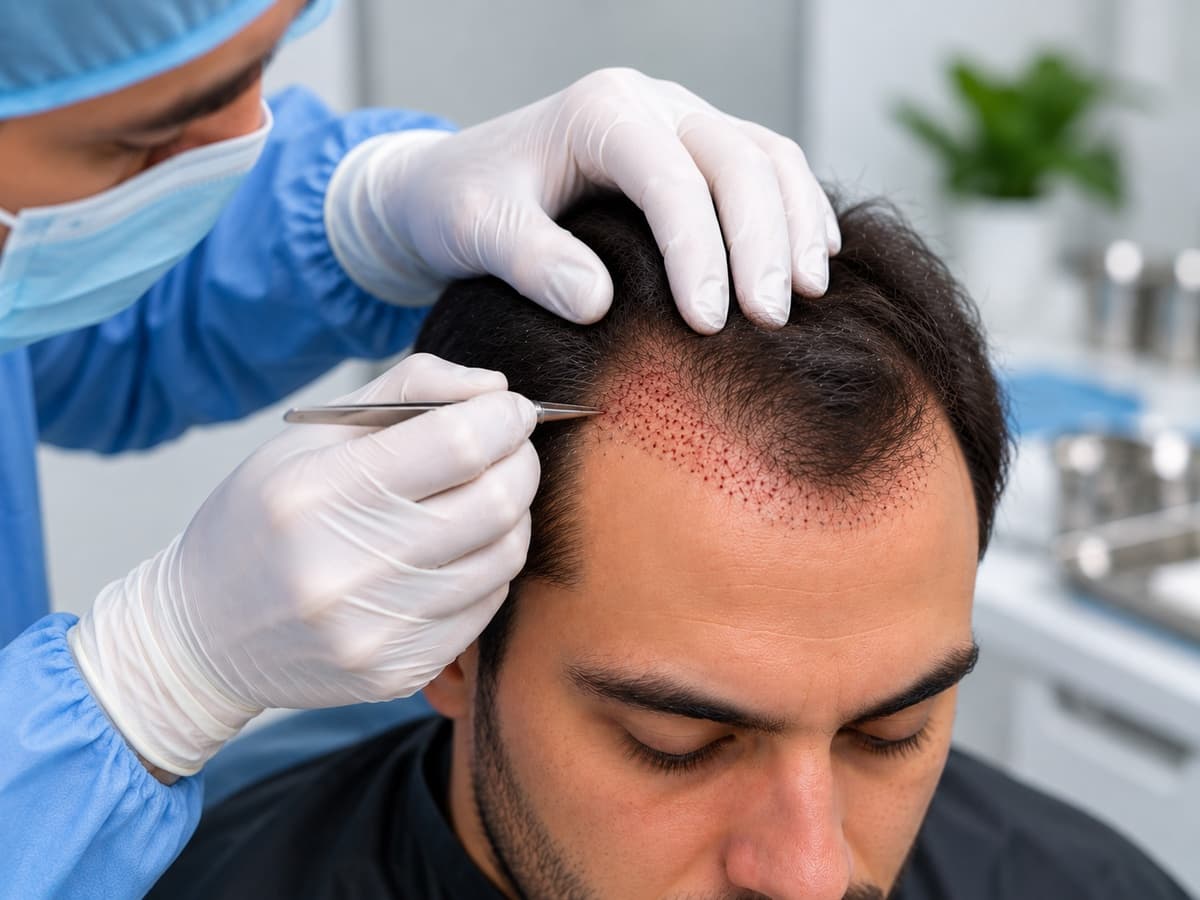
FUE describes how grafts leave the donor area. Individual follicular units are extracted one at a time from a suitable donor area, then implanted into the areas of hair loss or thinning.
Because units are taken individually rather than as a strip, the donor area heals as scattered points rather than a line. That is the practical reason most patients who wear their hair short prefer FUE.
Extraction is spread across the donor area rather than concentrated in one patch, so the donor area is not left visibly depleted. How many grafts can safely be taken is a function of your own donor density, which is measured during assessment.
Who this is — and isn't — the right choice for
We would rather turn down an unsuitable case than sell a procedure that cannot deliver what you want.
A good fit if
- Patients who wear their hair short and want to avoid a linear donor scar
- Scalp, beard, moustache and eyebrow restoration
- Patients whose donor area suits individual extraction
Not the right call if
- Donor areas already harvested close to their practical limit
- Patients unwilling to have the donor area trimmed where the plan requires it
How the procedure runs
No stage of this is a surprise on the day — here is the full sequence.
- 01
Donor assessment
Donor density and characteristics are assessed to work out what can safely be taken.
- 02
Extraction
Follicular units are extracted individually, spread across the donor area rather than concentrated.
- 03
Graft preparation
Extracted units are sorted and prepared for implantation.
- 04
Implantation
Grafts are implanted into the treatment area following your natural growth direction.
What the period after treatment looks like
Including the stages most clinics gloss over. Exact timings vary between patients — yours are confirmed by the clinic before you go ahead.
Immediately after
The donor area is tender and small points form where units were taken.
Early healing
Donor points close over and crusts settle with the washing routine the clinic gives you.
Shedding phase
Implanted hairs shed before regrowth begins — expected, and not a sign of failure.
Regrowth
Growth comes in gradually over the following months, on a timeline discussed at consultation.
FUE questions patients ask
How is FUE different from FUT?
They differ in how hair is taken from the donor area. FUE extracts units individually and leaves scattered points; FUT removes a strip and leaves a linear scar. Both are offered here, and which suits you is decided at consultation.
Is FUE better than FUT?
Neither is universally better. FUE avoids a linear scar, which matters most to patients who wear their hair short. FUT can suit other cases. The right answer depends on your donor area and how you wear your hair.
Find out if FUE is right for your case
Send your details and the doctor will review your case. You get an assessment of your hair loss and a personalised treatment plan — no obligation to book.
- Reviewed by the doctor, not a call-centre agent
- A quotation for your own treatment plan, not a package price
- Honest answer if you are not a good candidate
Ask about FUE
Four details, sent on WhatsApp. The doctor reviews your case. No obligation.
Often considered alongside this
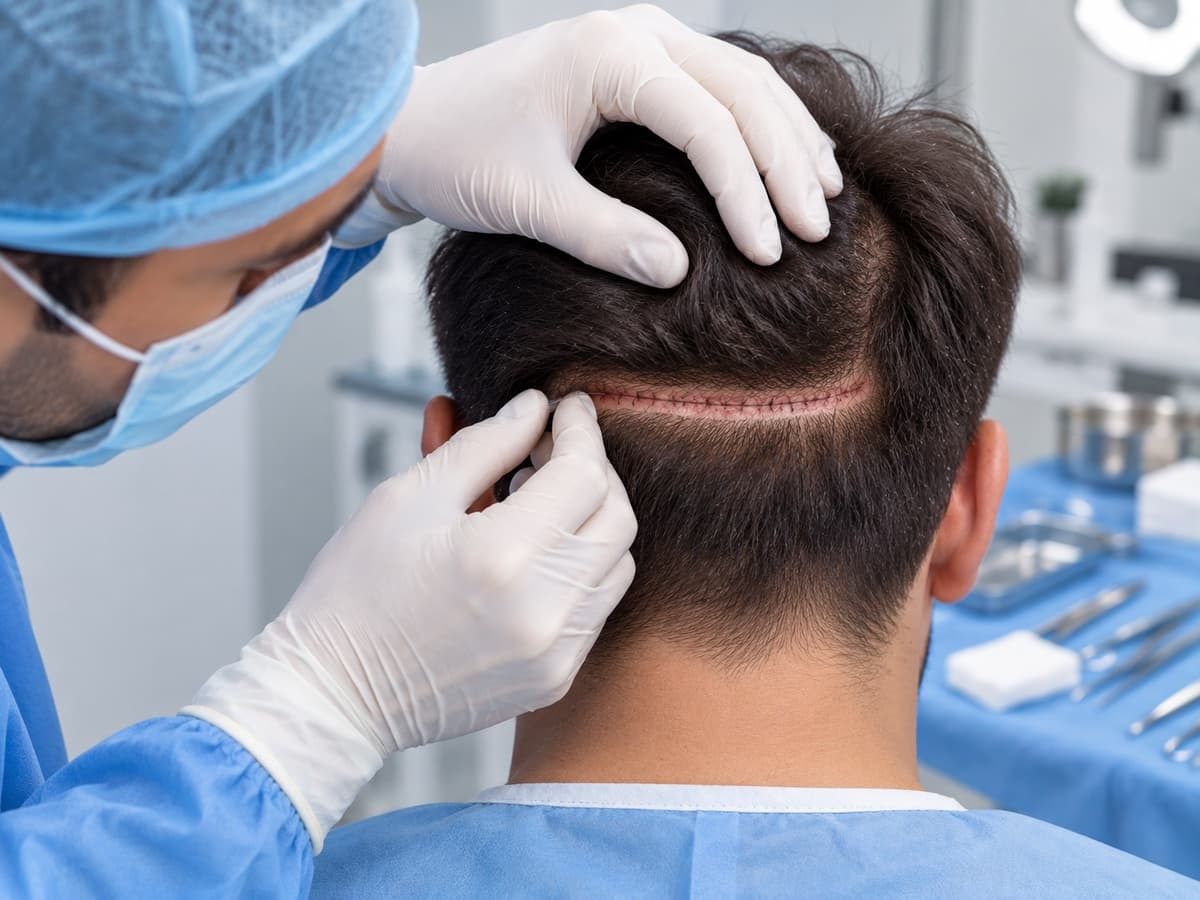
FUT — Follicular Unit Transplantation
A donor strip is removed and the follicles within it are prepared for transplantation.
FUE Hair Transplant
Advanced Follicular Unit Extraction — individual grafts harvested from your donor area and placed where hair has thinned.
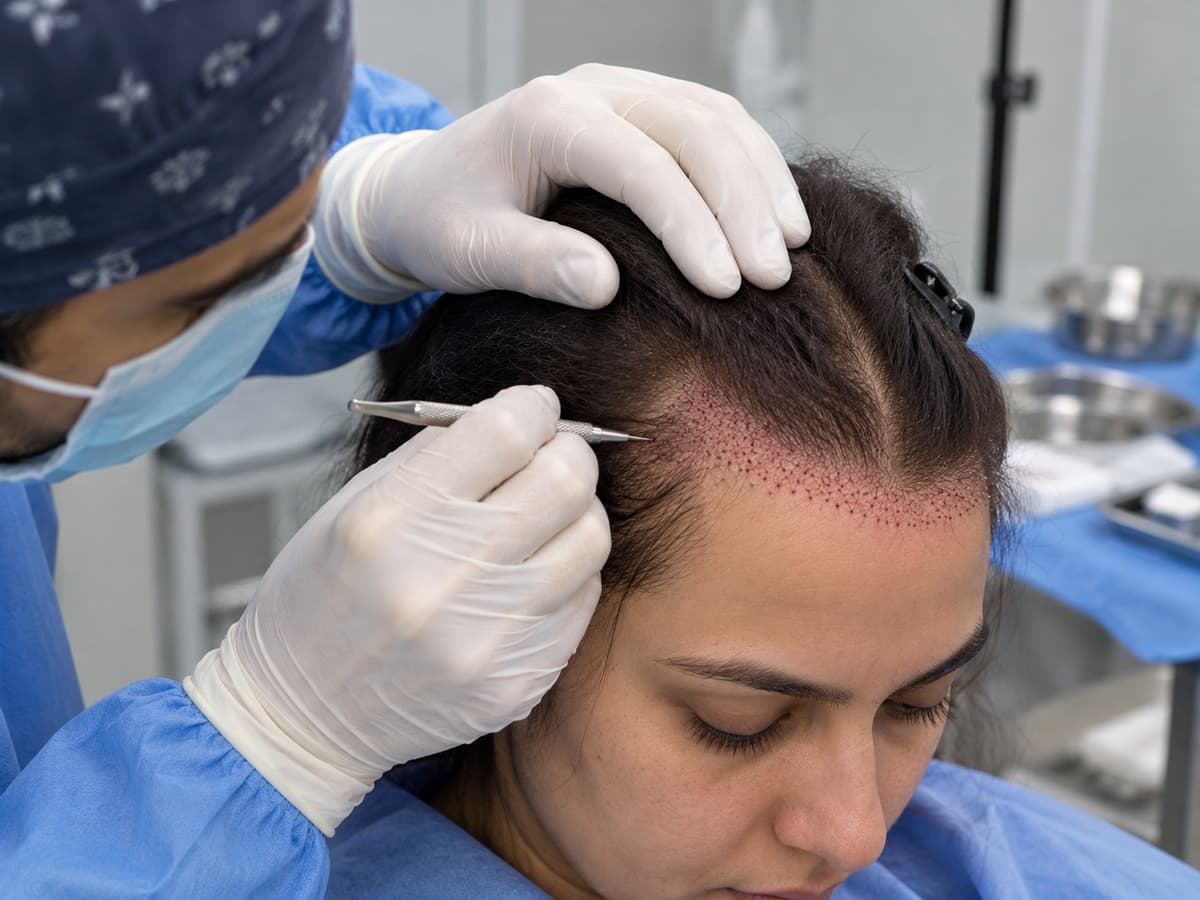
Female Hair Transplant
Hair restoration for women, planned around diffuse thinning, a widening parting or a receding hairline.