
PRP Therapy
A non-surgical scalp treatment using your own platelet-rich plasma.
- Type
- Non-surgical
- Anaesthesia
- Topical, where used
- Course
- Assessed at consultation
- Source
- Your own blood
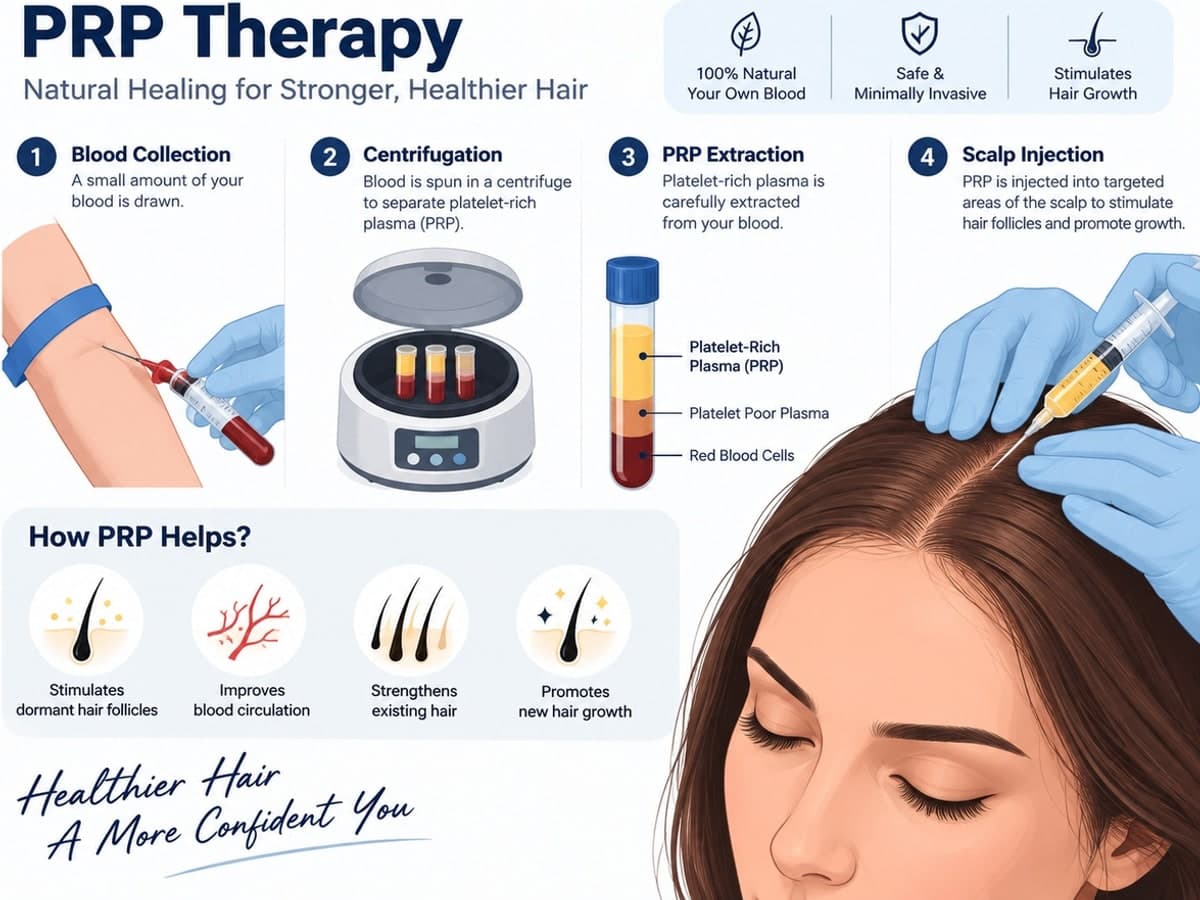
What PRP Therapy actually involves
PRP takes a small sample of your own blood, separates and concentrates the platelet-rich portion of the plasma, and introduces it into the scalp in the area being treated.
It is worth being clear about what PRP is used for. It is a supportive scalp treatment used alongside a wider plan — it does not create new follicles in an area where they have already been lost. Anyone promising regrowth on a fully bald scalp from PRP alone is overstating it.
Whether PRP is appropriate for you, how many sessions are planned and how they are spaced is decided at consultation. The final clinical description of this treatment is subject to doctor approval.
Who this is — and isn't — the right choice for
We would rather turn down an unsuitable case than sell a procedure that cannot deliver what you want.
A good fit if
- Early thinning where follicles are weakening but still present
- Supporting existing hair as part of a wider treatment plan
- Patients who want to try a non-surgical option before considering surgery
- Support alongside a hair transplant, where the doctor recommends it
Not the right call if
- Areas that are already fully bald — no injectable regrows a lost follicle
- Patients with platelet or clotting disorders, or on certain medications
- Anyone expecting a single-session fix; PRP is planned as a course
How the procedure runs
No stage of this is a surprise on the day — here is the full sequence.
- 01
Blood draw
A small sample, comparable to a routine blood test, is taken from your arm.
- 02
Separation
The sample is processed to separate and concentrate the platelet-rich portion of the plasma.
- 03
Scalp preparation
The treatment area is prepared, with topical numbing where the doctor uses it.
- 04
Treatment
The concentrate is introduced into the scalp across the area being treated.
What the period after treatment looks like
Including the stages most clinics gloss over. Exact timings vary between patients — yours are confirmed by the clinic before you go ahead.
Same day
Mild tenderness or redness in the treated area is common. You are given aftercare instructions before you leave.
First days
The clinic will confirm what to avoid — typically harsh products, swimming and heavy exercise for a short period.
Across the course
Sessions continue at the intervals planned for your case.
Ongoing
Any maintenance schedule is agreed with the doctor based on how your scalp responds.
PRP Therapy questions patients ask
Does PRP regrow lost hair?
It is used to support follicles that still exist. Once a follicle is gone, only transplantation restores hair to that spot — and it is better to hear that upfront than to be sold a course that cannot deliver it.
How many sessions will I need?
That is planned around your case at consultation. PRP is a course of sessions rather than a single treatment.
Is it painful?
Most patients describe brief pressure or stinging rather than pain. Topical numbing is used where the doctor considers it appropriate.
Find out if PRP Therapy is right for your case
Send your details and the doctor will review your case. You get an assessment of your hair loss and a personalised treatment plan — no obligation to book.
- Reviewed by the doctor, not a call-centre agent
- A quotation for your own treatment plan, not a package price
- Honest answer if you are not a good candidate
Ask about PRP Therapy
Four details, sent on WhatsApp. The doctor reviews your case. No obligation.
Often considered alongside this
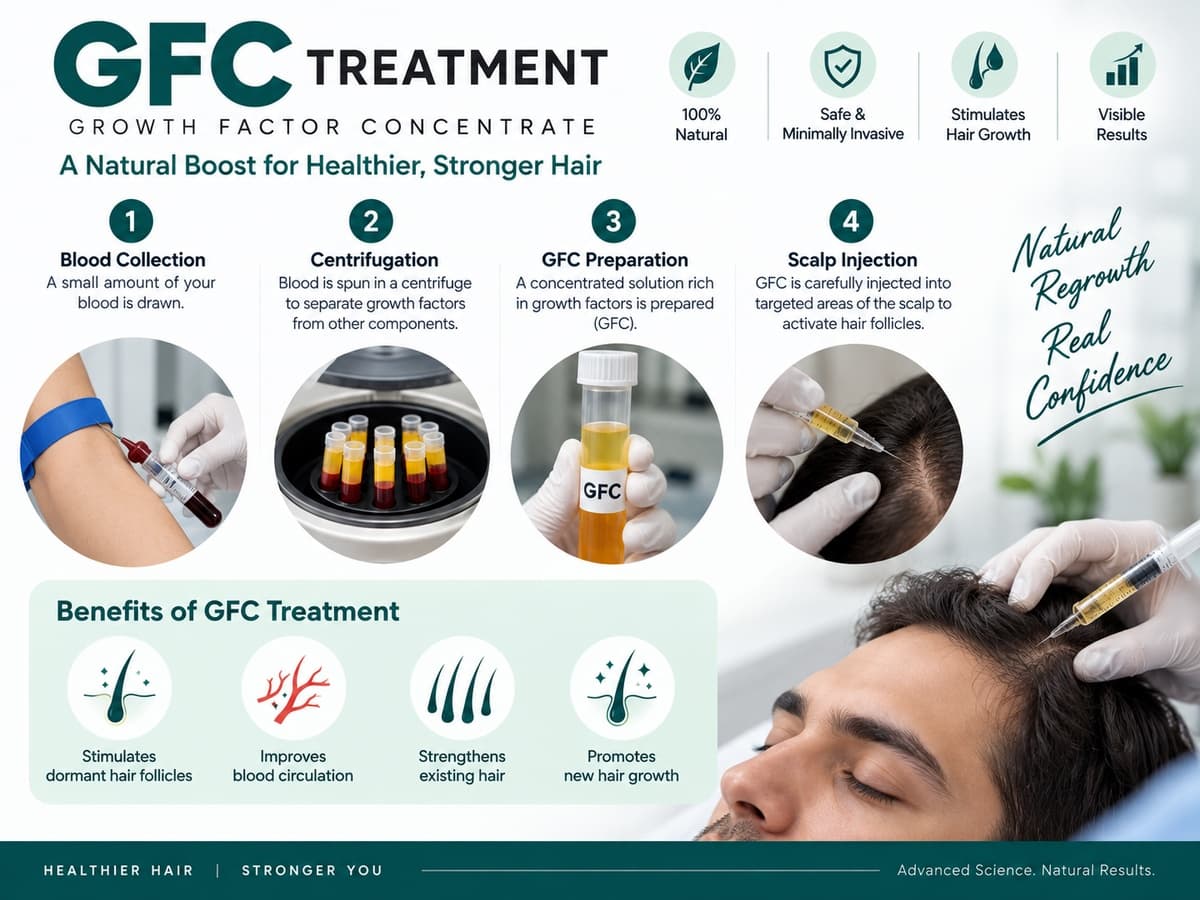
GFC Therapy
Growth Factor Concentrate — a non-surgical scalp treatment prepared from your own blood sample.
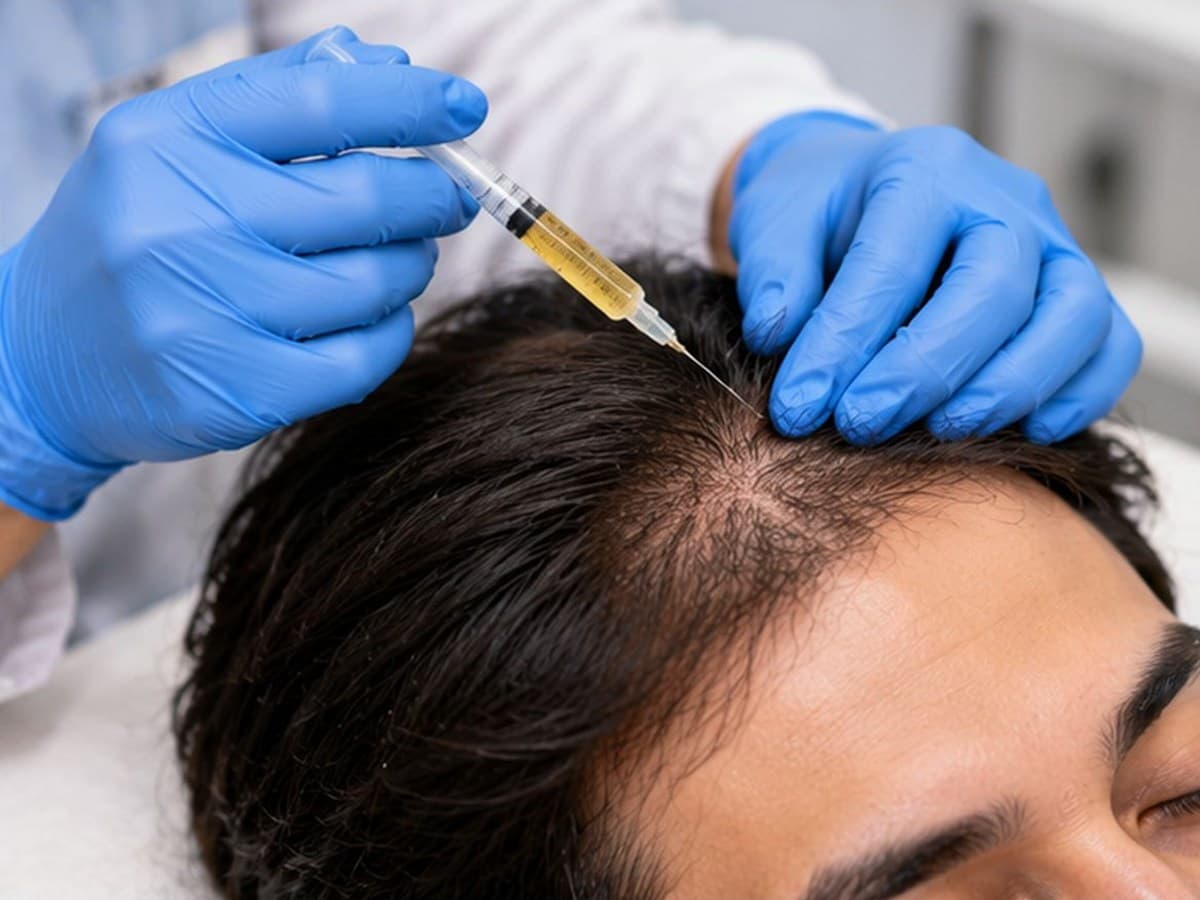
Exosome Therapy
A newer non-surgical scalp treatment, used to support thinning hair where the follicles are still present.
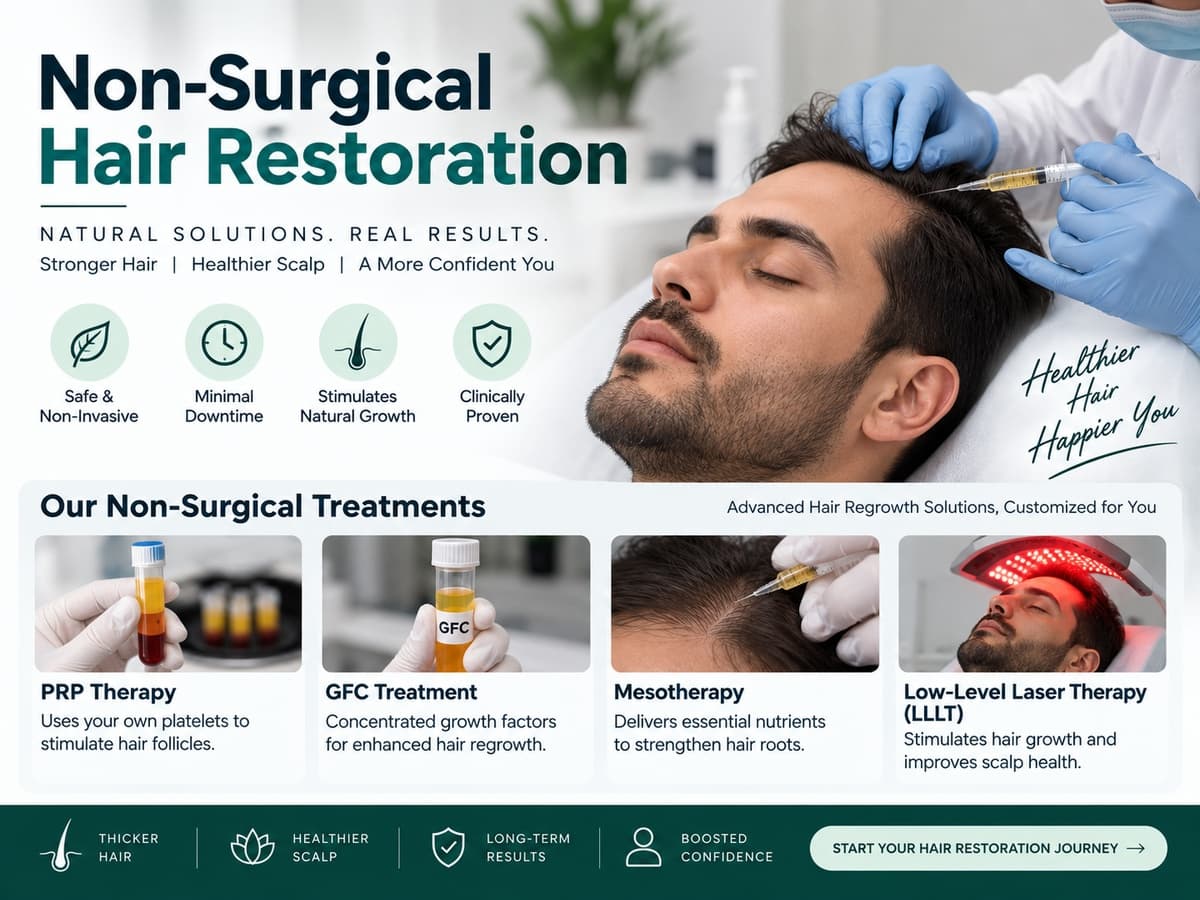
Non-Surgical Hair Restoration
Non-surgical options for thinning hair, planned around the cause and the stage of your hair loss.